


Strange state of affairs in the Central African Republic!
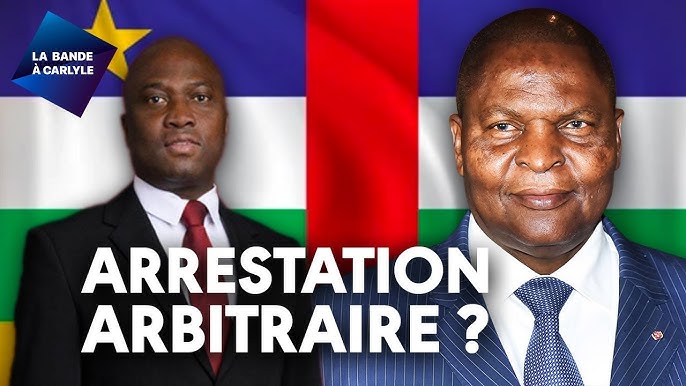
Under the Central African Republic’s Code of Criminal Procedure, the law sets the maximum period of police custody at 112 hours. This was confirmed by Ghislain GRESENGUET, a magistrate and Director of Criminal Affairs and Pardons at the Ministry of Justice, during a programme on Guira FM. But is this rule really being followed? Apparently not! Normally, when a person is arrested at a police station or gendarmerie post, judicial police officers conduct their preliminary investigation in accordance with the law. But this same law states that after 112 hours, that person must appear before the public prosecutor. In certain serious cases, an extension may be requested, but this requires the consent of the public prosecutor’s office, which, in principle, monitors compliance with time limits. In cases of flagrante delicto, according to Magistrate GRESENGUET, the public prosecutor may issue a committal order and would then require a swift trial at the next available hearing. This is intended to prevent detention from becoming a punishment prior to any conviction. However, for at least the past six years, under Touedéra, it is punishment that has prevailed. For example, at the Gendarmerie’s Research and Investigation Section, some defendants have been languishing for six or seven years, well beyond the legal time limits; the same applies at the OCRB. A few examples: Dominique Désiré ERENON spent three months in police custody before being transferred to an investigating judge, who issued a committal order against him. Lambert Akovourou, the MP for Djema, who was arrested on the basis of a mere accusation with no real evidence, remains detained at the OCRB, with no regard for his parliamentary immunity. He has been in prison for six months, for no reason. This situation has taken this turn since 2020; before that, things functioned more or less normally. In reality, pressure on the judiciary does not always come directly from those in power; the mere presence of a minister during a suspect’s hearing is sufficient. As was the case with Dominique Désiré ERENON appearing before the investigating judge, where the Minister of Justice had personally attended. This leaves no doubt as to his intentions. To explain these shortcomings in the law, the regime cites a lack of resources, staff, equipment, etc. Despite these false pretexts, the Central African justice system remains at the mercy of the whims of those in power. People remain locked up for years in police custody, when this period should last a few days at most. Criminal proceedings become a farce in the face of the whims of those in power. Is this what the 7th Republic is all about?
Analysis by Isabella Luisa CAPELLI | LAMINE MEDIA
For: FatimaLamineHebdo
Date: 2 June 2026
Copyright ©: 2013 - 2026 All rights reserved: Lamine Media
Terms of Service hosted by HOSTINGER - 2013–2026 LAMINE MÉDIA. All rights reserved.